Surface Analysis, Advanced Spectroscopy, and Machine Learning: Brussels Welcomed the ECASIA 2026 Conference After 19 Years
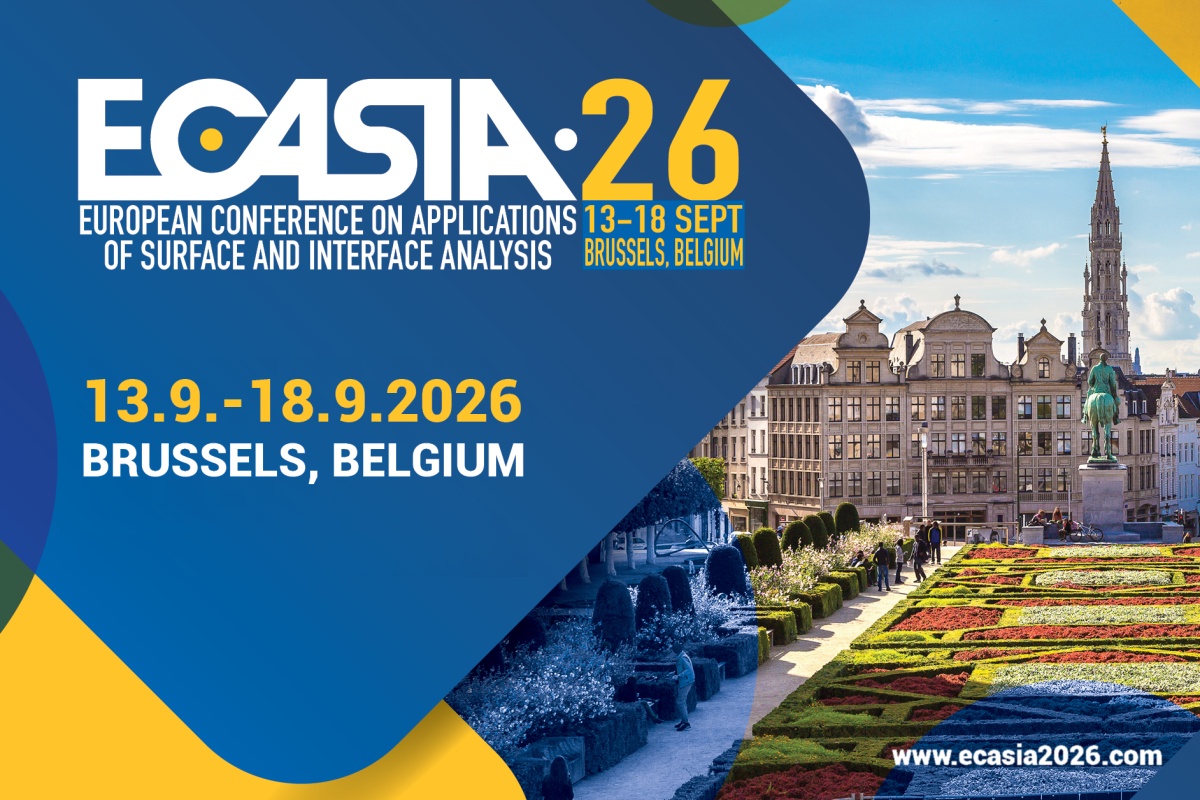
Venue: Flagey, Brussels, Belgium
Date: September 13–18, 2026
Project Manager: Ing. Michaela Šefrnová
INTRODUCTION
In mid-September, after nineteen years, the European capital once again became the venue of one of the most dynamic events in materials research – the European Conference on Applications of Surface and Interface Analysis (ECASIA 2026). We organized the event in cooperation with two leading Brussels universities, Vrije Universiteit Brussel (VUB) and Université Libre de Bruxelles (ULB), under the chairmanship of Prof. Tom Hauffman. The iconic Flagey cultural center in the Brussels district of Ixelles, renowned for its architecture and the outstanding acoustics of its former radio and television studios, provided a fitting backdrop for the entire meeting. The conference brought together leading scientists and industry representatives to discuss not only traditional methods of surface and interface analysis, but also groundbreaking research under real operating conditions and the use of artificial intelligence.
SCIENTIFIC PROGRAM
The six-day science marathon kicked off on Sunday at the VUB campus in Etterbeek with a series of specialized courses. Professor John Watts (University of Surrey) introduced participants to the principles of X-ray photoelectron spectroscopy (XPS) and secondary ion mass spectrometry (SIMS), while Dr. Gustavo Trindade (UK's National Physical Laboratory) focused on the advanced analysis of complex 3D SIMS data using machine learning. The main program, held from Monday to Friday in four parallel studios at Flagey, offered nineteen thematic tracks. Topics included in situ and operando measurements, thin films, corrosion, catalysis, biomaterials, semiconductors, energy storage and conversion, and the analysis of historical and geological artifacts (including research on the wooden hull of the historic ship Mary Rose).
The program featured five plenary lectures. On Monday, the laureate of the prestigious ECASIA 2026 Award, Prof. Hendrik Bluhm (Fritz Haber Institute of the Max Planck Society), took the stage, introduced by ECASIA President Philippe Marcus. Over the following days, Prof. Rob Ameloot (KU Leuven), Dr. Claudia Cancellieri (Empa), and Dr. Dominique Costa (Institut de Recherche de Chimie Paris) presented their visions. Special attention went to Dr. Vladyslav Turlo (Empa), recipient of the Young Plenary Lecture Award, who presented the use of artificial intelligence and the OptiMat Chat conversational platform in atomistic modeling. A distinctive feature of this year's edition was its strong support for young scientists – ECASIA and the publisher Wiley awarded travel grants to talented PhD students, and prizes for the best oral and poster contributions were presented at the end of the conference. Selected papers will also be published in a special issue of the journal Surface and Interface Analysis.
SOCIAL PROGRAM AND NETWORKING
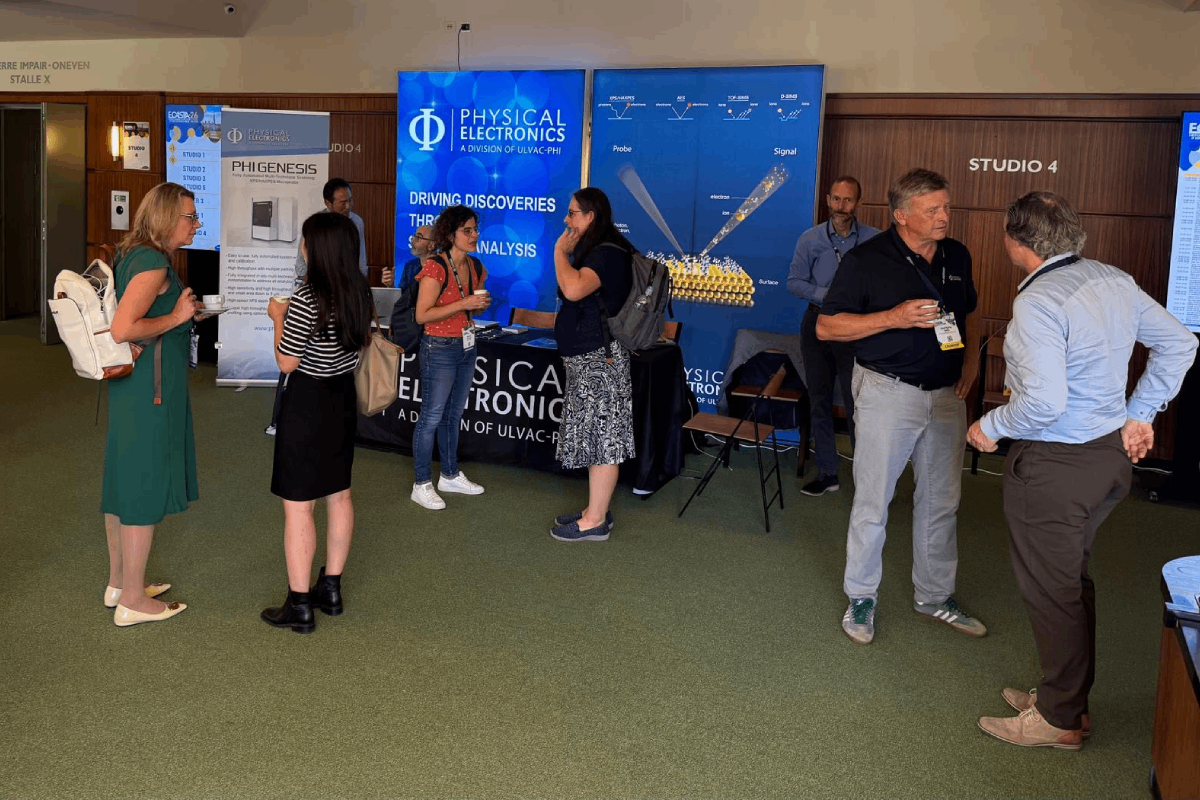
A rich social program allowed delegates to make connections in a relaxed atmosphere while discovering the architectural and cultural gems of Brussels. It all began with Monday's early-evening Opening Reception, held together with the opening of the exhibition, followed by a Tuesday reception accompanying the extensive poster session. On Thursday afternoon, participants headed into the streets of the Belgian capital on guided tours, which were fully booked almost immediately – delegates could admire the famous Brussels Art Nouveau, explore the city's vibrant street art scene, or discover its most important historical landmarks.
The highlight of the social program was Wednesday's completely sold-out Conference Dinner in the exclusive setting of the Albert Rooftop restaurant. This unique venue on the fifth floor of the Royal Library of Belgium on the Kunstberg offered participants not only excellent seasonal cuisine, but above all a breathtaking panoramic view of Brussels by night.
CONCLUSION
ECASIA 2026 in Brussels clearly confirmed that modern surface analysis, combined with electrochemical methods and machine learning, is opening entirely new horizons in the development of materials for sustainable energy, electronics, and medicine. The meeting at the iconic Flagey center brought exceptionally stimulating discussions and laid the foundations for many future international projects.
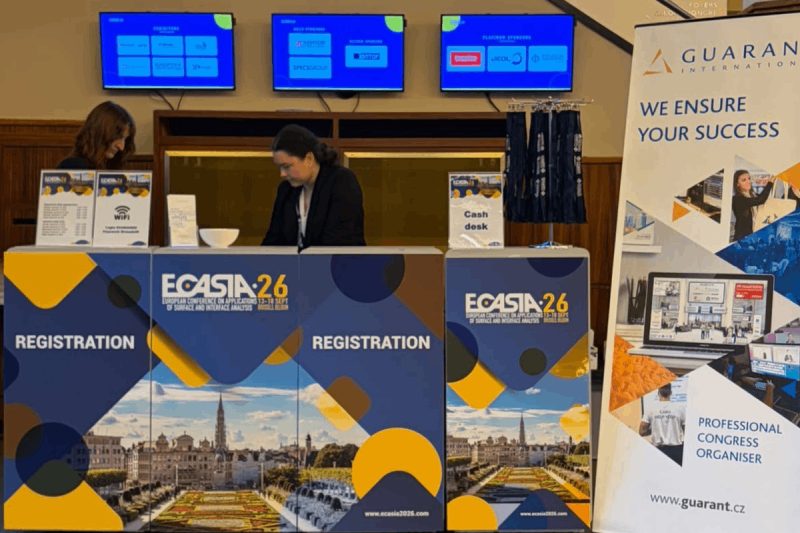
Great thanks go to the host universities Vrije Universiteit Brussel and Université Libre de Bruxelles, Conference Chair Prof. Tom Hauffman, the ECASIA association, scientific sponsors FNRS and FWO, publishers Wiley and Elsevier, and all commercial partners and exhibitors. The smooth preparation, exhibition coordination, accommodation, and overall delivery of this prestigious international conference were ensured by the GUARANT International team led by Project Manager Ing. Michaela Šefrnová.